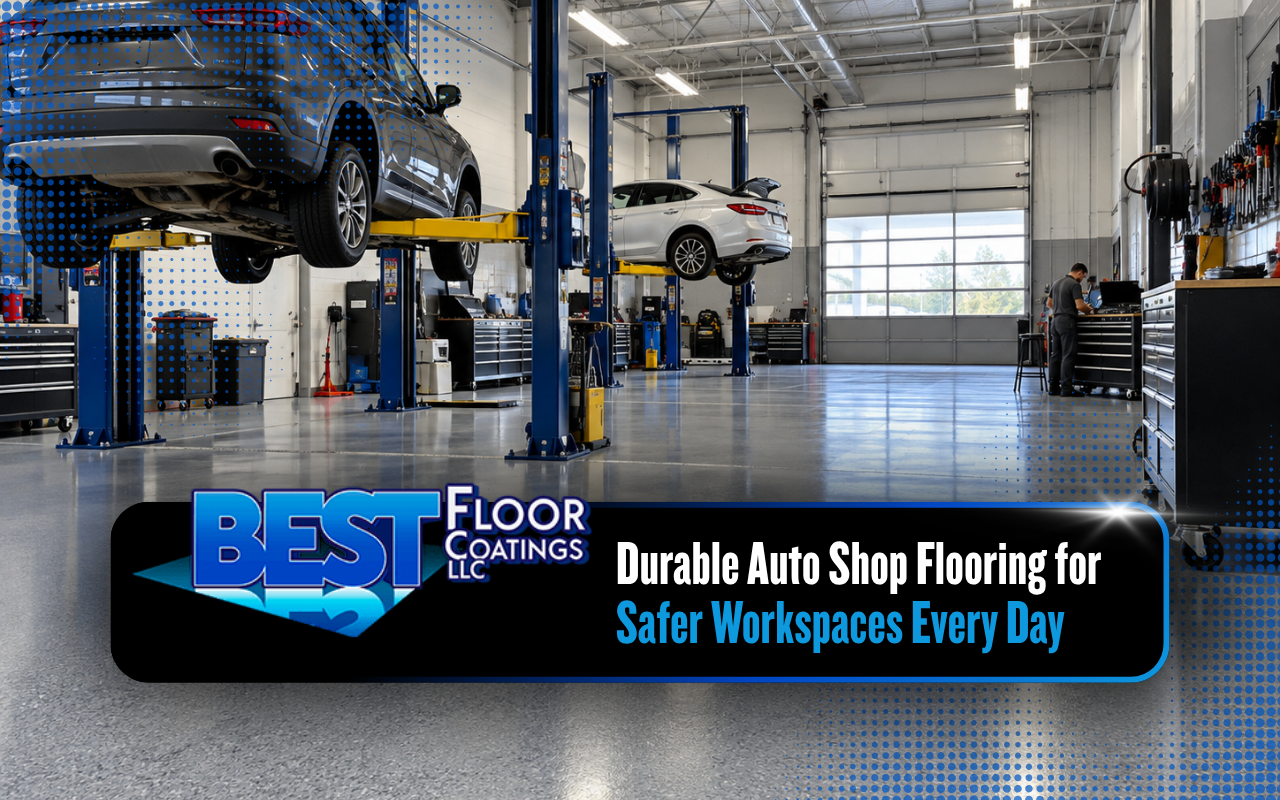
Auto shop flooring takes daily pressure from vehicles, tools, oil, and movement. The right surface can make cleaning easier, reduce damage, and create a safer place for technicians and visitors. At Best Floor Coatings LLC, we focus on practical systems for busy automotive spaces.
Choosing the right coating also helps protect concrete from stains, cracks, and wear. With smart material choices and care, shops can improve service bay floor protection while keeping the workspace clean, professional, and ready for demanding work.
Why Flooring Choice Matters in Busy Auto Shops
Every repair bay faces heavy loads, dropped tools, tire traffic, and fluid spills. Weak surfaces can chip or crack, which may lead to more cleaning and repair work. Quality auto shop flooring creates a stronger barrier between shop activity and the concrete below.
Oil-resistant flooring and durable coatings also support a cleaner work area. Because liquids stay closer to the surface, teams can remove spills quickly. This can reduce stains and help keep walking and working zones easier to manage.
Coating Materials That Handle Demanding Shop Conditions Well
Epoxy, polyurethane, and polyaspartic systems are common choices for automotive spaces. Each option can protect concrete while improving the shop appearance. Our industrial epoxy flooring solutions show how strong coatings can support demanding work areas.
- Epoxy creates a hard, seamless surface that is easy to clean.
- Polyurethane can add flexibility and resistance to wear.
- Polyaspartic coatings cure quickly and support faster project completion.
Oil and Chemical Protection for Busy Service Areas
Fluids are part of everyday automotive work. Engine oil, cleaners, coolant, and brake fluid can stain or damage unprotected concrete. Chemical-resistant shop floors create a barrier that helps limit this damage and makes routine cleanup simpler.
For auto shop flooring, the coating should match the liquids used in the space. At Best Floor Coatings LLC, we can discuss exposure levels and surface needs before recommending an auto shop coating service for your facility.
Durable Surfaces Support Long-Term Shop Performance Every Day
Busy shops need floors that can handle weight, movement, and repeated impact. A strong coating bonds to prepared concrete and helps reduce surface wear. This gives technicians a more reliable workspace while protecting the base floor from damage.
- Select coatings rated for vehicle and equipment traffic.
- Repair cracks before applying a new coating system.
- Use added texture where extra traction is important.
Our commercial coating options can also support areas such as customer zones, workspaces, and high-traffic paths.
Simple Maintenance Keeps Shop Floors Working Longer Daily
Regular care helps auto shop flooring stay clean and dependable. Sweep dirt and small debris to reduce surface scratches. Clean spills quickly, especially oil and strong chemicals, so they do not sit on the coating longer than needed.
A mild cleaner and soft mop are usually enough for routine care. Our team at Best Floor Coatings LLC also recommends checking high-traffic areas so small issues can be addressed early.
Safety Features Make Daily Shop Movement More Secure
Wet or oily floors can create slip risks around service bays. Texture additives can improve grip without making the floor difficult to clean. Clear walkways and visible work zones can also help people move through the shop with more confidence.
- Add texture in areas where spills are more likely.
- Use floor colors to separate bays and walking paths.
- Keep lighting strong so surface hazards are easier to see.
A well-planned epoxy coating system can combine durability, easier cleaning, and practical safety features in one finished surface.
Frequently Asked Questions
What flooring works well in an auto shop?
Epoxy, polyurethane, and polyaspartic coatings are common choices. The best option depends on traffic, chemical exposure, surface condition, and how quickly the shop needs to return to normal use.
Can coatings resist oil and automotive fluids?
Yes. Many systems are designed as oil-resistant flooring and can also support protection from common shop fluids. The exact resistance depends on the coating type and the substances used in your facility.
How can shop floors become less slippery?
Texture additives can increase traction in wet or oily areas. They are often added during installation to create a safer finish in service bays.
Do damaged concrete floors need full replacement?
Not always. Small cracks and surface damage may be repaired before coating. Proper preparation helps the new system bond well and can avoid the need for complete concrete replacement.
Who should install a professional shop coating?
Experienced industrial flooring contractors can evaluate the concrete, prepare the surface, and choose the right coating. Professional preparation is important because it supports better bonding and longer use.
Build a Cleaner, Stronger Shop Floor for Daily Work
Good auto shop flooring should support safety, cleaning, durability, and a professional appearance. The right coating can protect concrete, reduce maintenance needs, and help your team work in a cleaner and more organized environment.
At Best Floor Coatings LLC, we can review your shop conditions and recommend a practical path forward. For guidance based on your daily workload, connect with us to discuss your project.