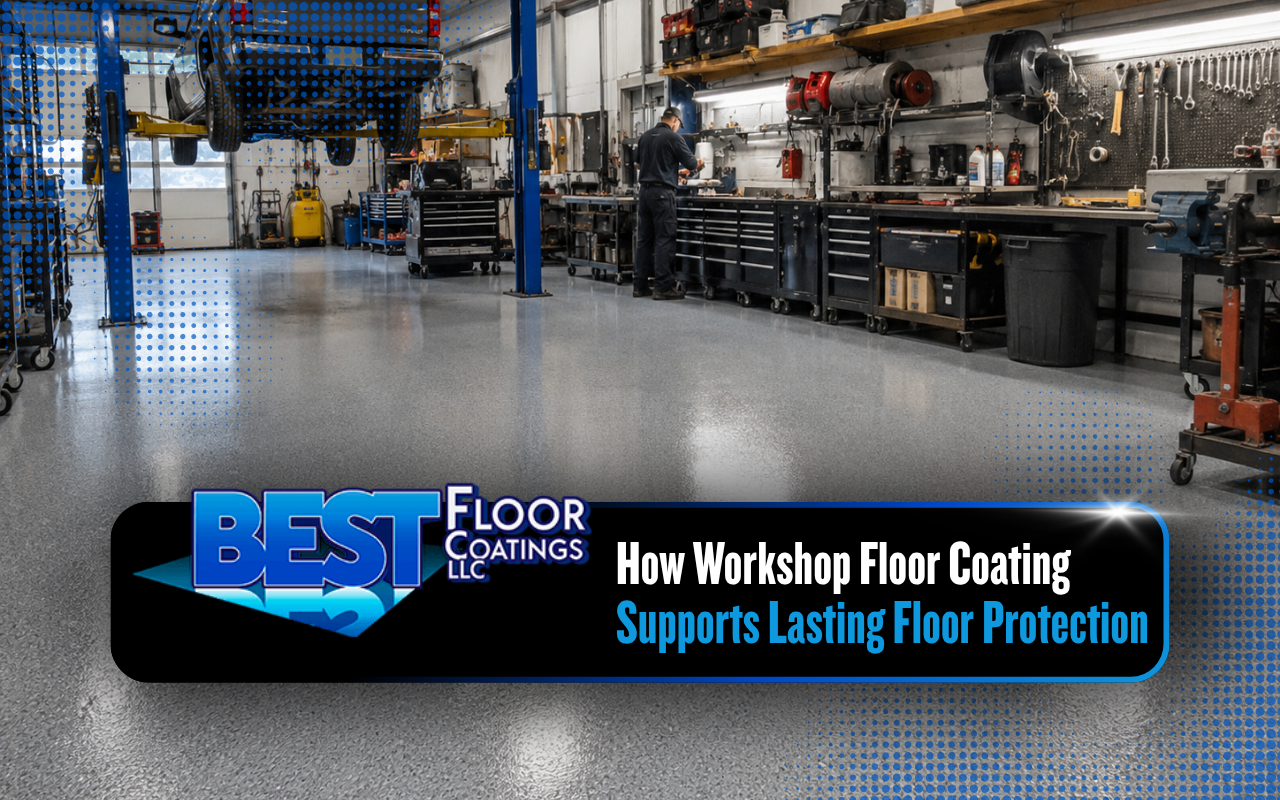
A reliable workshop floor coating protects the surface where daily work happens. Heavy tools, equipment, spills, and foot traffic can quickly damage bare concrete. The right system creates a cleaner, safer space while helping the floor stay strong for years.
At Best Floor Coatings LLC, we look at how each workshop is used before recommending a solution. Load levels, chemical exposure, cleaning needs, and downtime matter. Matching the system to real conditions supports better workshop floor protection and fewer repairs.
Common Coating Options For Busy Workshop Concrete Floors
Different coatings offer different benefits. Epoxy creates a strong bond and smooth finish, while polyaspartic systems cure quickly and resist sunlight. Polyurea is flexible and durable, while polyurethane can handle movement.
- Epoxy works well for many heavy duty concrete floors.
- Polyaspartic systems are useful when fast return to service matters.
- Polyurea can handle impact, movement, and demanding daily use.
- Polyurethane may suit areas where flexibility is important.
Our epoxy coating options can help you compare one of the most common choices for workshops.
Key Factors That Shape Your Best Flooring Choice
Every workshop has different demands, so the best workshop floor coating depends on more than appearance. Consider floor loads, possible spills, cleaning needs, and allowed installation downtime.
Chemical resistant flooring is useful where oils, cleaners, fuels, or other liquids are common. Slip resistance also matters in wet areas. Review our concrete floor coating solutions for practical ways to protect worn concrete.
Epoxy Strengths And Limits In Working Environments Today
Epoxy creates a hard, seamless surface that handles tools, carts, and regular traffic. It also makes cleaning easier because dust and dirt do not settle into bare concrete. For many indoor workshops, it balances durability, appearance, and simple care.
However, epoxy may need more cure time, and direct sunlight can affect some finishes. Concrete movement or poor preparation may cause cracking or peeling. Therefore, correct surface preparation is as important as the material.
Fast Curing Systems Reduce Disruption During Floor Projects
When downtime matters, polyurea and polyaspartic systems can be useful. They often cure faster than standard epoxy, helping workshops return to use sooner. They also resist wear, impact, and common shop chemicals.
- Fast curing can shorten the time equipment stays out.
- Flexible coatings can better handle small concrete movement.
- UV-stable finishes help reduce yellowing near open doors.
At Best Floor Coatings LLC, we can explain whether a rapid-cure system fits your schedule. Our polyaspartic coating services are another option for durable workshop surfaces.
Special Finishes Support Safety Appearance And Daily Use
A workshop coating service can include more than a plain finish. Decorative flakes hide small marks, textured layers improve grip, and clear topcoats add protection. Some spaces may also need static control or added chemical resistance.
Safety should remain part of the decision. Added texture can reduce slipping where water or oil is present, while marked zones organize work areas. These details help a workshop floor coating support daily performance and a cleaner look.
Professional Installation Protects Your Coating From Early Failure
Good results begin before application. Concrete must be clean, dry, and properly prepared for a strong bond. Cracks, weak areas, moisture, and old sealers should be addressed first to reduce lifting or peeling.
- Professional grinding creates a better surface for bonding.
- Moisture checks can reveal hidden installation risks.
- Correct mixing helps the coating cure evenly.
- Careful application improves finish quality and long-term strength.
At Best Floor Coatings LLC, we focus on preparation as part of every project. Experienced floor coating contractors can also help choose the right system for your traffic, tools, and working conditions.
Frequently Asked Questions
How long can a workshop coating normally last?
A quality coating can last for years when the concrete is prepared correctly and the surface receives regular care. Traffic, impact, chemicals, and cleaning habits all affect its lifespan.
Which coating handles workshop chemicals most effectively?
The right option depends on the chemicals present. Polyurea, polyaspartic, and some epoxy systems can provide strong resistance, but the coating should match the exact exposure in your space.
Can coatings work over damaged concrete workshop floors?
Yes, but cracks and weak areas should be repaired first. Proper preparation gives the new coating a stronger base and helps prevent early failure.
How soon can a newly coated floor reopen?
Cure time varies by system. Some fast-curing products allow earlier use, while standard epoxy may require more time before tools or equipment return.
Does a coated floor become easier to clean?
Yes. A sealed surface reduces dust and makes many spills easier to remove. Regular sweeping and mild cleaning can help protect the finish.
Build A Stronger Workshop Floor For Long-Term Use
Choosing the right workshop floor coating means balancing strength, safety, maintenance, and downtime. A well-matched system can protect concrete, improve cleaning, and create a reliable surface for everyday work.
When you are ready to plan your project, contact us through our floor coating consultation page. We can review your space, discuss your needs, and recommend a practical coating system built for long-term use.