
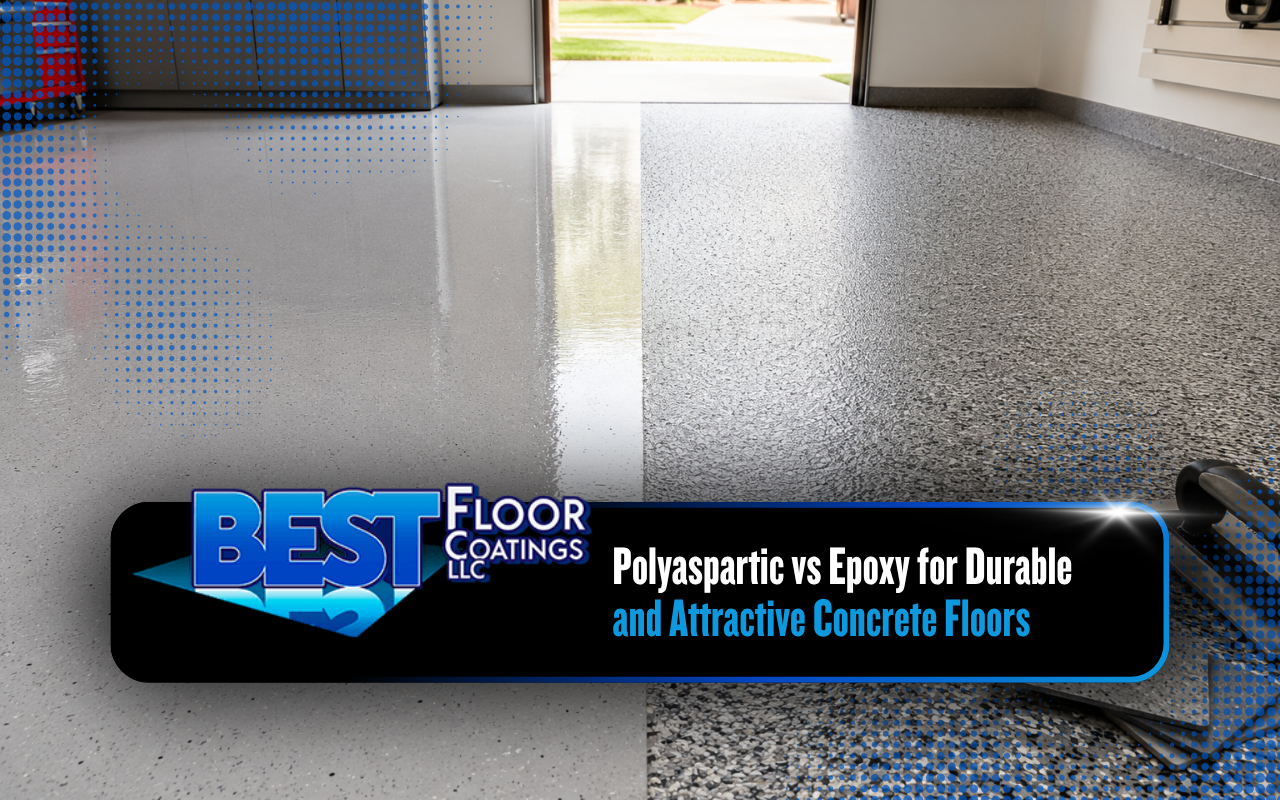
Choosing between polyaspartic vs epoxy can feel confusing because both systems protect concrete and improve its look. However, each option has different strengths, so the right choice depends on your space, schedule, and daily use.
At Best Floor Coatings LLC, we explain these choices in simple terms. Our goal is to help you select a floor that fits your home, garage, shop, or business without adding stress to the process.
Key Differences That Shape Long-Term Concrete Floor Performance
The main polyaspartic vs epoxy differences involve flexibility, cure time, UV protection, and upkeep. Polyaspartic stays slightly flexible, so it handles impact and temperature changes well. Epoxy creates a hard surface that resists wear and supports heavy use.
Both can protect concrete for years when installed correctly. Still, the better coating for concrete floors depends on sunlight, traffic, moisture, and how quickly you need the area back in service. A careful polyaspartic vs epoxy review also considers indoor or outdoor use, expected spills, and future cleaning needs.
Important Durability Factors for Garages and Commercial Spaces
Polyaspartic coatings resist cracking because they can move slightly with the concrete. They also hold up well in busy garages, workshops, and commercial areas where tools, carts, or vehicles may cause impact.
- Flexible protection during temperature changes
- Strong resistance to chips and surface wear
- Reliable performance in high-traffic areas
Epoxy is also durable and handles heavy loads well. However, older epoxy may become brittle in colder conditions. With Best Floor Coatings LLC, you receive clear guidance based on the real demands of your floor.
Installation Steps and Surface Preparation Requirements for Lasting Results
Good results begin with proper concrete preparation. Installers often grind the surface, remove dust, repair cracks, and check moisture before applying either system. These steps help the coating bond and reduce peeling later. Skipping preparation may cause weak spots, bubbles, or early failure, even when the coating itself is high quality.
A polyaspartic coating company must work quickly because the material sets fast. An epoxy floor coating service usually has more working time, but it may require several layers and longer waiting periods between coats.
Faster Curing Times Can Greatly Reduce Project Downtime
One major benefit of polyaspartic is speed. As a faster cure floor coating, it can often support foot traffic on the same day and vehicle traffic sooner than many epoxy systems. This makes it useful for busy homes and active businesses.
- Shorter waiting time after installation
- Less disruption to daily routines
- Quicker return for garages and work areas
By comparison, epoxy may need one to three days before full use. Therefore, your schedule may strongly influence the polyaspartic vs epoxy decision.
Reliable Resistance to Sunlight, Chemicals, and Everyday Stains
Standard epoxy can yellow or lose clarity after long sun exposure. Polyaspartic includes stronger UV protection, so it is often a better choice for patios, pool decks, and garages with frequent sunlight.
Both systems resist oil, grease, and common spills. Yet polyaspartic often handles acids, cleaning products, and sunlight with less fading. This protection can make daily cleanup easier and help the surface keep a fresh look. Our polyaspartic floor coating options explain where this added resistance brings the most value.
Flexible Design Choices, Simple Cleaning, and Lasting Appearance
Both coatings allow many colors, flakes, textures, and gloss levels. Epoxy can create a deep, polished look, while polyaspartic often gives an even finish with strong color stability.
- Decorative flakes for a layered appearance
- Textured finishes for better grip
- Gloss levels that match your space
Cleaning is simple with regular sweeping and gentle mopping. Polyaspartic usually needs fewer touch-ups because it resists UV damage and stains. Epoxy may need spot repairs or a new topcoat after years of heavy use. You can also review our epoxy coating solutions for more finish ideas.
Frequently Asked Questions
Which coating cures faster?
Polyaspartic usually cures faster, which helps reduce downtime for garages and commercial spaces.
Which option handles sunlight better?
Polyaspartic has better UV stability, so it is less likely to yellow or fade.
Is epoxy still a durable choice?
Yes. Epoxy remains strong, attractive, and suitable for many indoor concrete floors.
Which coating needs less maintenance?
Polyaspartic often needs less maintenance because it resists stains, chips, and sun damage.
How do I choose the right system?
Consider traffic, sunlight, schedule, design goals, and long-term care before making your choice.
Choose the Right Concrete Floor Coating With Confidence
The best system depends on your priorities. Polyaspartic suits projects that need speed, flexibility, UV stability, and simple care. Epoxy works well when you want proven strength, design freedom, and a hard indoor surface. A professional polyaspartic vs epoxy comparison can prevent guesswork and support a better long-term result.
At Best Floor Coatings LLC, we help you compare polyaspartic vs epoxy based on your actual space. Review our concrete floor coating services, then contact our team for clear project guidance.