
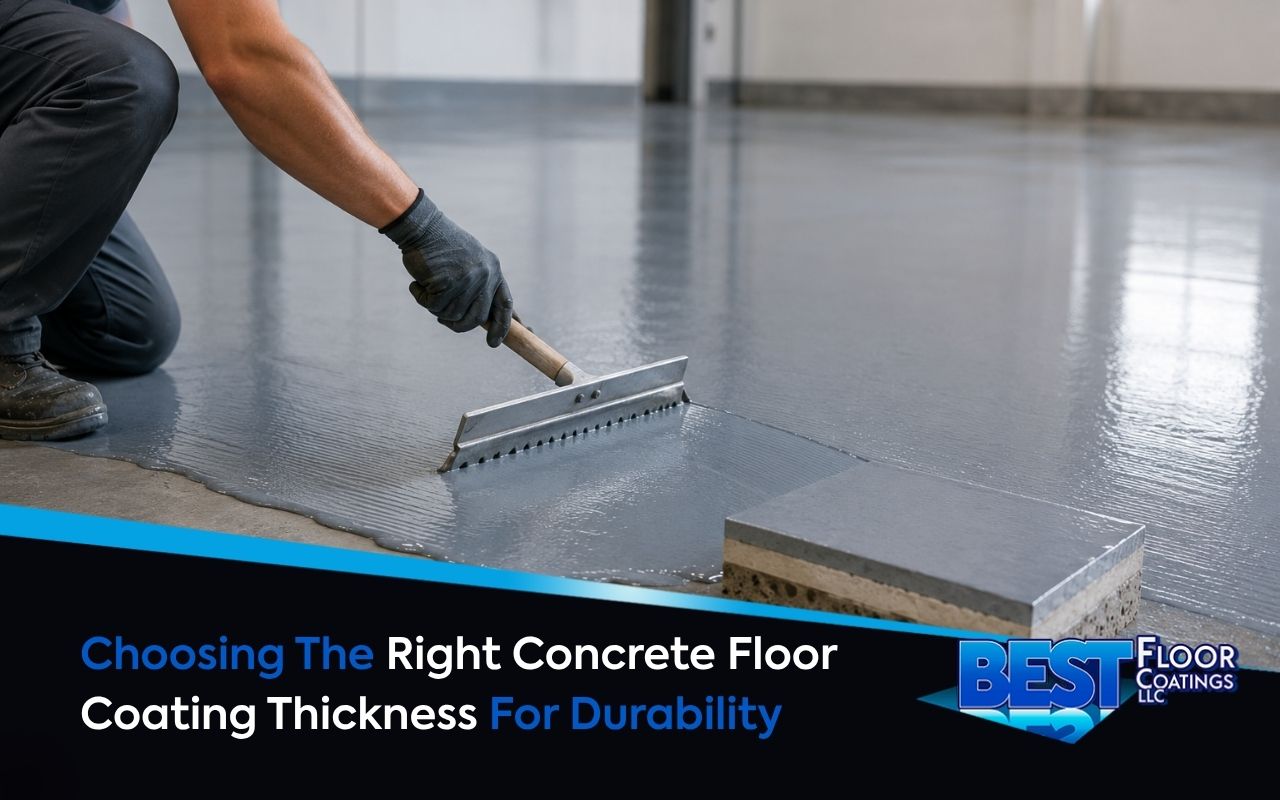
Concrete floor coating thickness affects how long your floor lasts, how it handles traffic, and how well it protects the slab below. When the layer is too thin, wear can show early. However, when it is too thick, curing issues may appear.
At Best Floor Coatings LLC, we help customers choose a coating depth that fits the space, not a random number. Therefore, the right plan should match traffic, surface condition, and daily use.
Floor Coating Thickness Matters For Daily Performance
The right coating depth protects concrete from scratches, stains, moisture, and impact. In addition, it helps the surface stay clean and safe. Concrete floor coating thickness should never be guessed because every space has different needs.
A thin layer may work well in a showroom or office. However, garages, shops, and warehouses often need stronger protection. A clear coating thickness guide helps you understand what your floor can handle before work begins.
Key Factors That Shape Better Coating Depth Decisions
Several details affect the final thickness. First, we look at the concrete condition. Then, we review traffic, spills, cleaning needs, and the type of coating system. These steps help prevent early peeling, cracks, and weak spots.
- Rough or damaged concrete may need more build.
- Heavy traffic areas need stronger coating layers.
- Chemical exposure can change the coating choice.
- Better surface prep helps the coating bond well.
Our team at Best Floor Coatings LLC also considers how the space will be used in the future. As a result, we can guide customers toward a floor system that supports both current and long-term needs.
Thin Film And High Build Coatings Compared Clearly
The choice between thin film vs high build coatings depends on how much stress the floor must handle. Thin film systems are often used for light foot traffic, clean spaces, and simple protection. They can also create a smooth, finished look.
High build systems are thicker and stronger. Therefore, they are often better for work areas, garages, warehouses, and industrial floors. For related options, our epoxy coating systems can help you compare strength, finish, and daily performance.
Recommended Thickness Ranges For Common Floor Uses Today
Concrete floor coating thickness often changes by use. Light spaces may only need a thinner system, while work areas may need a stronger build. However, the best choice always depends on the slab and the way people use the floor.
- Light-use spaces often need simple surface protection.
- Garages may need more strength against tires and tools.
- Warehouses often need thicker coatings for daily loads.
- Industrial spaces may need added resistance to spills.
A careful coating thickness guide helps make these choices easier. Also, our concrete coating solutions explain how different systems protect floors in homes and businesses.
Heavy Use Floors Need Stronger Protective Systems Daily
The best thickness for heavy use floors is usually higher because these areas face more pressure. Forklifts, carts, tools, tires, and daily movement can wear down weak coatings fast. For that reason, a high build system is often the safer choice.
With Best Floor Coatings LLC, customers get clear guidance before choosing a system. We review traffic patterns, surface damage, and work conditions. Then, we recommend a practical concrete floor coating service that supports long-term durability.
Common Problems Caused By Poor Coating Thickness Choices
Poor thickness choices can lead to peeling, bubbling, scratches, dull areas, and early surface failure. In many cases, these problems happen because the coating was not matched to the floor’s real use. Concrete floor coating thickness must support the daily load.
- Thin coatings may wear through too soon.
- Thick coatings may cure unevenly if applied poorly.
- Weak prep can cause lifting and loose areas.
- Wrong systems can raise repair needs later.
An experienced epoxy flooring contractor can help avoid these issues. Also, our floor coating services show how the right process supports cleaner and stronger surfaces.
Frequently Asked Questions
How thick should a concrete floor coating be?
The right thickness depends on traffic, coating type, and surface condition. Light-use areas may need a thinner layer, while garages and work areas often need more protection.
Are thicker coatings always better for concrete floors?
Not always. A thicker coating can help in heavy-use areas, but too much material may cause curing or bonding problems. The system must fit the space.
What is the difference between thin and high build?
Thin film coatings give basic protection and a clean finish. High build coatings add more strength for impact, abrasion, and heavier daily use.
When should I call a flooring professional?
You should call a professional before coating damaged concrete, busy work areas, or floors exposed to spills. A proper inspection helps prevent costly mistakes.
Can coating thickness affect floor maintenance needs?
Yes. The right coating can make cleaning easier and reduce early wear. However, regular sweeping, mopping, and inspections still help protect the surface.
Plan Your Concrete Floor Project With Confidence Today
Concrete floor coating thickness is one of the most important choices in any floor project. It affects strength, appearance, cleaning, and long-term value. Therefore, planning the right system early can save time and reduce repair needs later.
When customers contact Best Floor Coatings LLC, we explain the safest next step and help match the coating to the space. To start the conversation, visit our contact page for project guidance.